
B2B Sales Development · Mojtaba Dashti
LinkedIn Has Digitized the Business Card. The Real B2B Sales Problem Remains.
Collecting connections is not the same as winning new business.
By Mojtaba Dashti | B2B Sales Development and International Business Communication
The short answer
Collecting connections is not the same as winning new business. Picture yourself at an industrial trade show. You meet purchasing managers, exchange contact details and discuss products. A few days later, you have a stack of contacts but no clear view of which conversation deserves a proposal, a sample or a meeting.
A business card is the beginning, not the result
Picture yourself at an industrial trade show. You meet purchasing managers, exchange contact details and discuss products. A few days later, you have a stack of contacts but no clear view of which conversation deserves a proposal, a sample or a meeting.
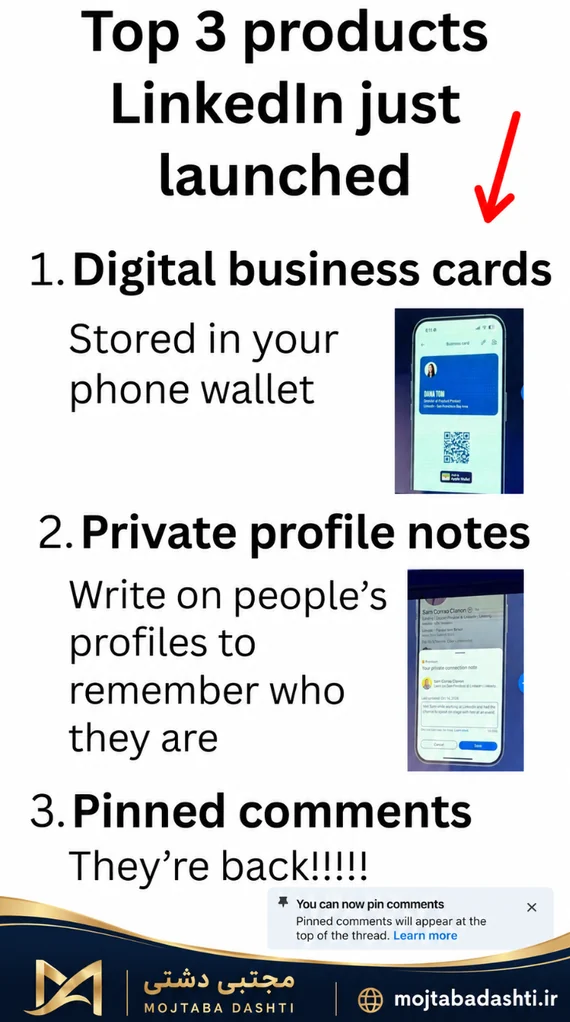
In October 2026, LinkedIn introduced a more personalized digital business card, with QR-based sharing and the option to keep it in a phone wallet. LinkedIn had QR profile sharing long before this announcement, so the novelty is the more polished card experience. Availability may vary by account and market.
1. The missing link is meaningful follow-up
A name and phone number are not a sales opportunity by themselves. What was the buyer trying to achieve? Which product or project came up? Was a technical document promised? Is a new meeting needed?
A digital card helps us find someone again. It does not tell us why we should contact them. Without meeting notes, the follow-up easily becomes another generic sales pitch.
2. What the digital card actually improves
A card can remove friction from exchanging contact information and take prospects straight to a professional profile. A strong profile offers evidence of experience, relevant projects and a clear way to continue the conversation.
The digital business card is not a CRM. A QR scan does not automatically qualify a lead, track a decision process or manage reminders. The benefit is easier contact exchange, not a guaranteed order.
3. What happens after someone scans your card?
Imagine a procurement director opening your LinkedIn page after a short conversation. Can they tell immediately who you help, the commercial problem you solve and where they can review your work?
In industrial B2B sales, supplier selection rarely follows one pleasant conversation. Trust grows from relevant evidence, informed responses and the ability to meet commitments, not from a polished card alone.
4. Private notes make a follow-up personal
LinkedIn also described Profile Notes for eligible Premium users: private reminders about who someone is, where you met and what you discussed. Feature rollout and account eligibility should be checked rather than assumed.
Compare “We met at the fair; do you need anything?” with “We discussed the delivery schedule for your new project. Were you able to review the technical specifications?” The second message continues a shared conversation instead of reopening it from zero.
5. Connection counts are not sales performance
A network of 200 new contacts may be valuable, but without qualification it tells us little about revenue potential. Track conversations with target buyers, identified needs, credible enquiries, meetings and the stages that reach an order.
Thirty carefully followed, relevant contacts may outperform hundreds of unqualified ones. The only defensible comparison comes from actual commercial outcomes, not vanity metrics.
6. A five-step post-event process
First record the person, company, role and preferred contact method. Next capture the discussion, need and constraints. Then agree a next action: send a catalogue, arrange a technical call, prepare a quotation or check back later.
Make the follow-up specific and record the response in a CRM or a simple shared file. The path is straightforward: first contact → need discovery → relevant follow-up → technical or commercial review → proposal → negotiation → outcome.
7. Are paper business cards obsolete?
Not necessarily. Paper remains natural in some industries and cultures, and not every buyer wants to scan a QR code during a meeting. Choose the exchange method that is comfortable for the other person.
The bigger question is not how modern the card looks. It is whether the prospect has a credible reason to continue talking to you. Tools enable contact; a disciplined sales process develops it.
The takeaway
LinkedIn can make introductions easier, but it cannot replace market knowledge, trust and consistent follow-up. In B2B sales, the real measure is the quality of the next conversation and the commercial progress that follows.
Mojtaba Dashti focuses on B2B customer acquisition, industrial sales development and organized commercial follow-up, with digital channels used to support a human relationship.
